The PLACES adventure began three years ago, built from the ground up on a design thinking approach – and a whole lot of creativity!
We kicked things off by getting hands-on with Lego bricks and writing love letters to the PLACES project, capturing our dreams, hopes, and wild ideas for what it could become.
Then we turned to the real experts – schoolteachers and their pupils. Through a detailed needs analysis, we explored what helps children and young people feel safe, comfortable, and genuinely happy at school. We discovered when learning feels most engaging and fun, and what motivates teachers to try out new approaches, especially playful learning and storytelling.
Armed with these insights, we developed a set of playful learning materials. Teachers from four EU countries joined us in testing them through training sessions and classroom activities with their pupils.
After an in-depth evaluation process, teachers shared valuable feedback and fresh ideas. Their input helped us fine-tune the materials into their final form, ready for teachers to use directly via:
Together with these amazing educators, we’ve also created inspiring good practice stories and recommendations to help others bring playful learning to life in their classrooms
Alice, a dedicated teacher, found herself sitting alone after a tough school day, questioning her impact. Her last class had been chaotic; students weren’t cooperating, conflicts were flaring, and nothing seemed to work.
She felt stuck. Until a small moment of inspiration changed everything.
Walking through the schoolyard, she noticed leaves falling in a curious pattern—almost forming words: Play-2-Learn. On impulse, she looked it up.
What she discovered was a game-changer: the Play-2-Learn platform, developed through the PLACES project, filled with stories, playful learning activities, and ready-to-use materials designed to boost engagement, collaboration, and joy in the classroom.
The next day, she introduced a new story-based activity – cutting “dragon scales” and working in groups – and something shifted. Her pupils were engaged, curious, and working together.
Other teachers took notice. “What did you do today?” one asked. Soon, others began exploring the platform too.
Step by step, a new, lighter atmosphere spread through the school – where teachers shared ideas, pupils looked forward to class, and even parents noticed the difference.
Alice’s story shows how small changes can spark big transformations.
Read the entire story about Alice here https://www.play-2-learn.eu/the-adventurous-story-about-places/ and enjoy a series of introductory videos.
We have compiled five key recommendations that are worth considering if we want to utilise PLACES material to its full potential.
Storytelling and playful learning should be used at all education levels, especially in lower secondary schools. Curriculum planners should integrate PLACES materials into national platforms to support life skills, health education, and engaging SDG-related learning.
Educators can link PLACES stories to international days to save time: Stunner for Anti-Bullying Day (SDG 3), Without Filter for Safer Internet Day, Upstream for Environment or Health Days, and Play Day for playful learning – integrating PLACES easily into curricula.
Schools need resources, creative spaces, easy access to materials, and less bureaucracy to fully implement PLACES’ playful learning methods.
Teachers need training, support, leadership backing, and collaboration to effectively deliver PLACES’ storytelling and innovative learning methods.
PLACES calls for curriculum flexibility, storytelling, and focus on well-being. It promotes playful, whole-school, and sustainable learning plus empathy and collaboration. For scale-up, it urges digital dissemination, educator training, and cost-effective tools to boost learning and well-being.
If you would like to read the entire good practice and recommendation report, you can find it here. https://www.play-2-learn.eu/inspiration-and-good-practice/
If you receive this newsletter and know any from the above-mentioned groups, whom you think could be interested in the “PLACES” project, please do forward the newsletter.
We hope that you find inspiration on
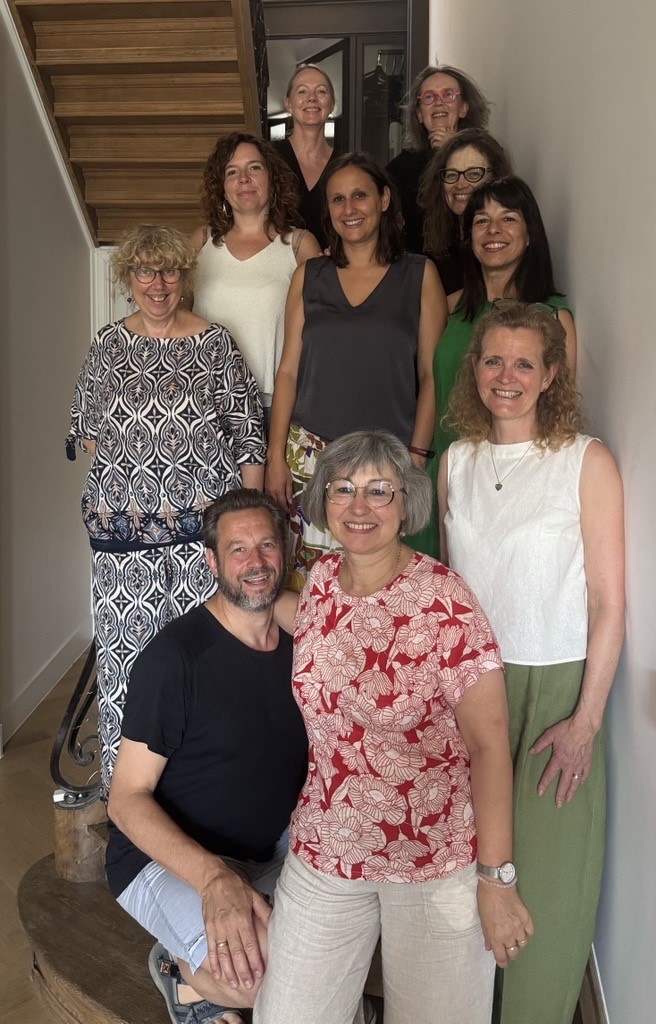
Photo: PLACES partnership during the final partner meeting in Brussels in July 2025