PLACES is an ERASMUS + project that works to support the implementation of the Sustainable Development Goals (SDGs). The full title of the project is; “Playful LeArning and storytelling that Create Engagement for the Sustainable Development Goals among children and young people”.
If you receive this newsletter and know any from the above-mentioned groups, whom you think could be interested in the “PLACES” project, please do forward the newsletter.
We invite you to visit the PLACES website
Since the 2nd newsletter, the PLACES ACADEMY has been piloted in the four countries – Denmark, Belgium, Italy and Greece – involving schoolteachers and pupils in a detailed evaluation process through questionnaires and focus group interviews. And the overall conclusion in the evaluation report emphasises a strong potential of the PLACES Academy to become a widely adopted model for inclusive, values-based learning across Europe and beyond.
The evaluation of the PLACES ACADEMY aimed to assess how effectively the first version of the Academy supported learning about the Sustainable Development Goals (SDGs) the European Integration Project and the use of the PLACES Academy. Feedback from both teachers and pupils highlighted the Academy’s innovative, flexible, and pedagogically rich approach. In particular, the storytelling format was praised for enhancing oral communication, creative expression, and moral reflection. Teachers observed increased participation, especially among pupils who are typically less engaged, as well as improved collaboration and confidence.
Pupils described the lessons as fun, exciting, and different from their regular classes. They appreciated the collaborative and playful approach, which encouraged communication, creativity, and critical thinking. As a result, pupils developed important transversal competences, such as teamwork, problem-solving, and creative thinking. The evaluation confirmed storytelling and the playful learning activities that follows, as an effective teaching method that supports inclusive and values-based education, while also boosting teachers’ abilities to deliver SDG-related content. This led to higher pupil engagement and the development of key competences.
Despite these successes, we cannot conclude that the PLACES ACADEMY – in its first version – succeeded in raising awareness of European integration. Although the materials contained relevant European content, they were not frequently used, resulting in limited learning about the European Union. The evaluation report provided several recommendations to enhance the PLACES platform and Academy. These include improving navigation, expanding language support and offline access, strengthening links to SDG and European themes, showcasing student-led adaptations, and broadening dissemination and peer learning networks.
Based on these evaluation results, the PLACES Academy and the “play-2-learn” platform has been refined and updated, and we invite you to visit the PLACES Academy on www.play-2-learn.eu
Currently, the Good Practice and recommendations report is being developed by the Institute of Child Health, one of the project partners, with the collaboration of all partners and teachers from the four participating countries who offered their insights and inspiring ideas. The report focuses on the good practices and ideas that have been extracted from the implementation of the PLACES materials by educators and their pupils.
These consist of good practice stories and ideas that can be transferred and implemented in the future by stakeholders beyond PLACES partnership and project period. Two inspiring and good practice stories from each participating country have been selected, as they constitute useful implementation ideas for future platform users ensuring future quality use and sustainability of the PLACES materials and stories in educational settings.
Additionally, the report includes policy and implementation recommendations for policy makers as well as a discussion of the enabling factors and challenges that further contribute to the upscaling and the implementation of SDG and the EIP through the methods of story-telling, playful learning and health promoting schools.
The report on good practices and recommendations contributes to the general objectives of the project, ensuring that increasing numbers of teachers and therefore children and young people are motivated and learn about the SDGs and EIP, with a perspective of becoming future ambassadors for sustainability, health and wellbeing, quality education and inclusion. Most importantly, our proposed good practices have been tested in practice by educators across European classrooms and have been proven for transforming teaching and learning into creativity and fun, improving the classroom’s social climate, as well as relationships among students and teachers.
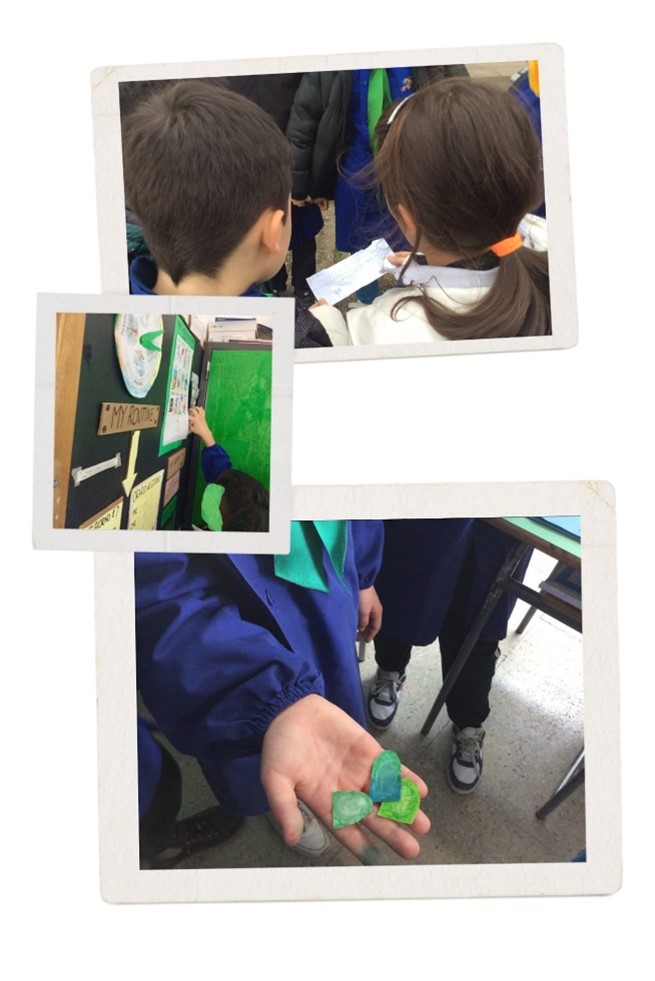
“Dragondancers” – good practice from Italy
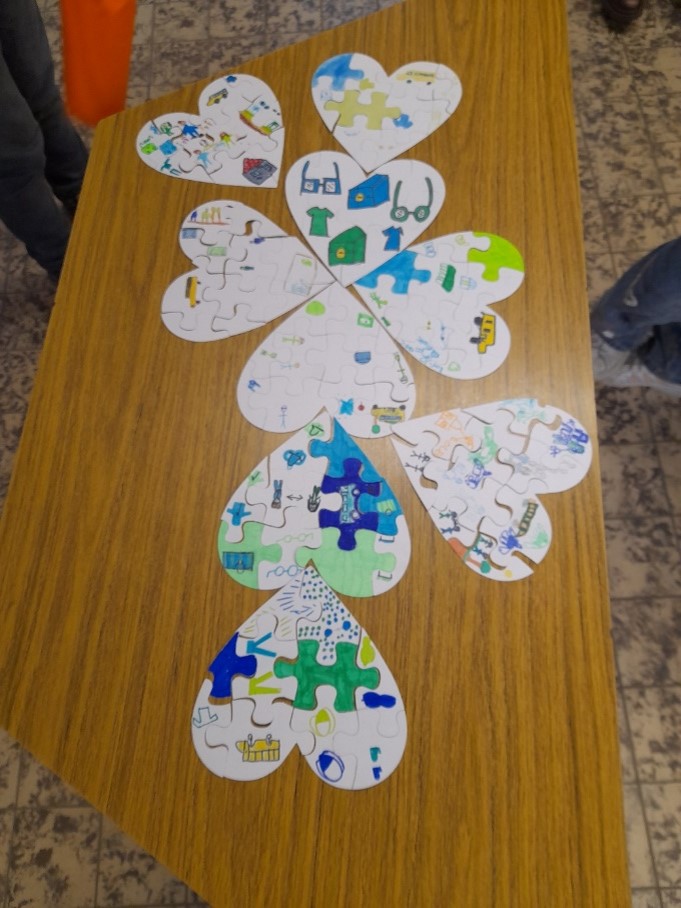
Puzzle of “School Camp” – good practice from Belgium
The Good Practice Stories and Recommendations will be available from the play-2-learn platform during summer 2025.
The PLACES project will end in August this year, and we re occupied by telling the story about PLACES in all participating countries as well as in Brussels.
The row of conferences started in Belgium the 20th of May where the Belgian partner Henallux had invited colleagues, teachers, the Wallon School Services (SPW), representatives from the voluntary sector, the sustainable development working group of the Namur Academic Pole.
The play-2-learn platform was presented to the audience, and one of the stories was interpreted to make the difference between explaining and telling clear for the audience.
The audience found it interesting and very good for the material that it is based on previous research and a substantial needs analysis among teachers and students. It was emphasised that it is important that PLACES Academy continues to be easily accessible and free after the project ends.
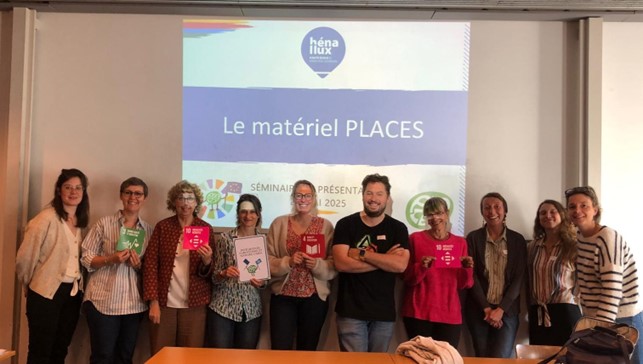
Photo: Teachers participating in the Belgian final PLACES Event
The next in the row was our Greek partner, Institute of Child Health, that organized their final conference in the Megaron Hall in Athens on the 24th of May entitled; “Storytelling and Playful Learning for the Sustainable Development Goals of the UN: The Implementation of the PLACES project in Greece”. The audience was the Greek educational and health promotion professional community. The nine speakers focused on innovative methodology in life skills and health promotion of wellbeing through storytelling and playful learning, good practices and implementation in schools with six of the participating teachers presenting the inspiring work with their students from primary and secondary schools in Athens. The audience listened to a live storytelling session of the story “Stonesoup”, accompanied by a presentation on using storytelling as an educational tool to teach inclusion, democratic values and foster active participation and teamwork for all the students. The conference ended with an enthusiastic discussion about the distribution of the PLACES materials and platform for more teachers across Greece.
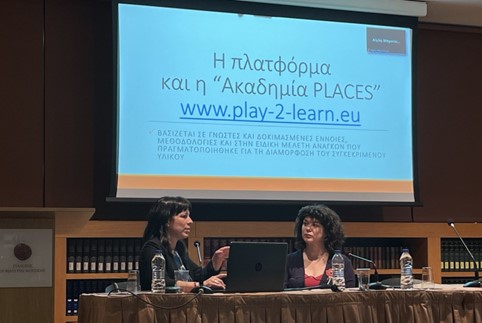
Photo: Electra Bada presenting the PLACES Academy during the Greek final PLACES Event
The Danish partnership – Design School Kolding, Fortælletid and South Denmark European Office – has chosen the United Nations International Day of Play on the 11th of June, to organize their final conference. In close collaboration with the Capital of Children in Billund Municipality they have planned a conference called ‘The Power of Play’, where the Places Academy will be presented and connected to other national playful learning projects and activities.
Among other things, the audience will play “hide and seek”, which is a national initiative from the Ministry of Education that encourages all Danes – children and adults – to play hide and seek at 11am.
The conference will end eating a birthday cake together, with the hope that a national tradition of focusing on the Power of Play every year around the 11 June, has been kick-started through the PLACES project.
Our Italian partner, University of Milan-Bicocca, organizes their final conference on the 12th of June, and will use the event to show how they have worked on a more strategic level with an entire school based on the whole school approach from the Health Promoting School Concept.
Last but not least the entire PLACES partnership organizes a European conference in Brussels on the 1st of July. In this conference we will present the PLACES Academy to the Brussels / European community, showing how the PLACES Academy is based, evidence-building on many years’ research within playful learning, storytelling as well as health promotion in schools, and these disciplines’ effect on the quality of learning, participative, engaging and inclusive teaching. Moreover, we will also show how the PLACES Academy can contribute actively to the EU’s strategic sustainable development agenda, EU values and active citizenship and the policy framework “pathway to School Success” that has been launched during the lifetime of the PLACES project.
An invitation and agenda for the final conference is attached to this newsletter.
If you want to know more about the PLACES Academy
We hope to see you at our final conference on the 1st of July in Brussels
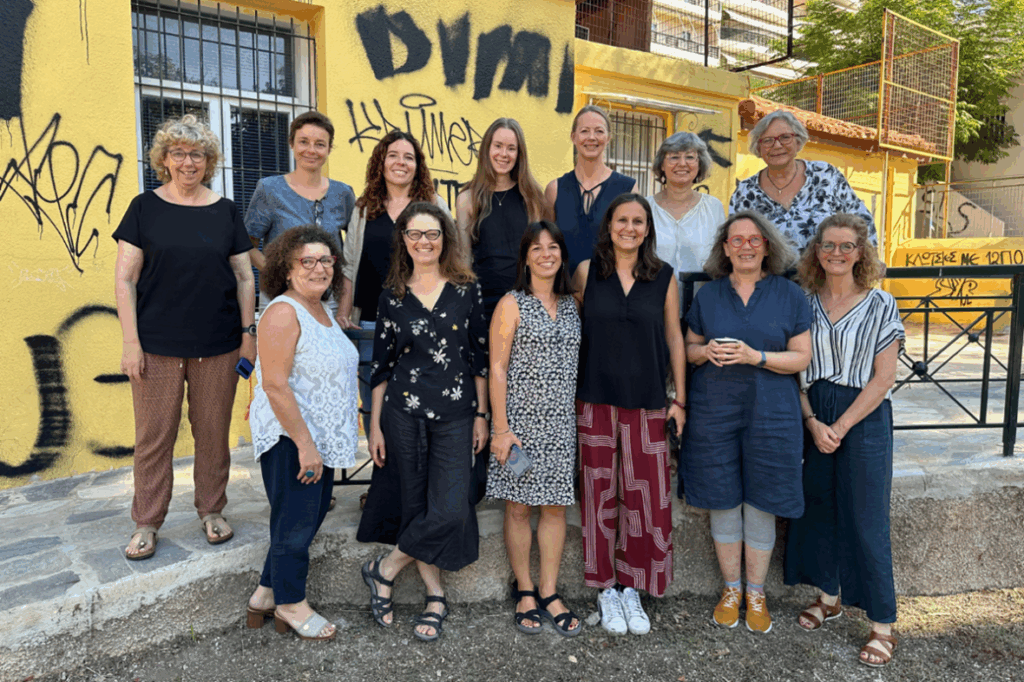
Photo: PLACES partnership during the partner meeting in Greece, September 2024